Goshogaoka
 Sharon Lockhart creates a very minimalistic approach to arthouse cinema and film in general. Throughout the entire 63 minute duration of her film Goshogaoka the camera remains stationary, in a constant single frame position. While valid arguments can be presented as to why this is useful artwork and a presentation of something completley unique, to me this film was very hard to sit through. As Steven Holden of the New York Times writes, "Goshogaoka is rife with metaphoric implications about the individual and the group. The girls look almost interchangeable and appear devoid of personality or even sexuality. Even when they separate into twos, they are little more than smoothly functioning cogs in a sports training machine. ''Goshogaoka'' celebrates a rigid conformism that feels at once comfortable and deadeningly dreary. Nothing bad can happen if you stay safely within the formation." Labeling the film as a message of ambiguity and metaphoric dance like sequences is about as concrete as you can get with Lockhart's film. It is a presentation with no solidified meaning but to me one thing is certain...it is not a film about basketball. But how could it be without any presence of a hoop or standard practice routines.
I believe Holden sums it up appropriately when he says, "(Goshogaoka) is a detached, methodical deconstruction of the body language of basketball that invites you to supply whatever interpretation you want. If you're not inclined to read multiple meanings into its choreographed groupings, it also invites you to doze off."
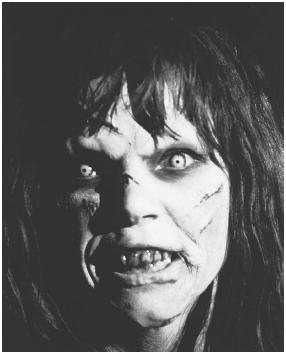
Lockhart's introduction to the class and her work was the most interesting part of her presentation. It is apparent she has a lot of interesting creative ideas and a unique approach to art. Hearing of her influences and path into her chosen career was something that sparked my interest in her work and what she was saying. Unfortunately this also offered a false impression to me of the type of film she would be presenting. Citing Linda Blair and John Cassavetes as strong influences lead be to believe she would be working in the same context as they had. Cassavetes almost single handidly invented American independent cinema in the late 1950's with his film Shadows, a great narrative film which confronts sexuality and racism in a time period which was not so accepting of the subject matter. He also brought a distinctinve flare for realistic character interactions and dialogue, stemming from his origins as an actor. This made me think that Lockhart's work would be more of a functional, realist form of filmmaking.
Her work is almost depressing to me personally. Not only is it a very long sequence of only a few altered shots there is no attention grabbing aspects to be found anywhere in the film. I feel like this film and her approach to cinema is unproductive and celebrated for self-aggrandizing reasons of a pretentious art community. It seems like it would do better as an installation piece where people could just walk up, observe it for a few mintues, and maybe return later to see any progression in the film because watching it for an hour can become irritating. Goshogaoka does present a non-narrative film which offers surprise, expectation, and creation while functioning as a notion on the environment of community and communal achievement but it still becomes despondent and much too calibrated.
posted by Ryan Reeve @ 3:34 PM


0 Comments:
Post a Comment
<< Home